 JobDone Pro
7 Cost Estimate Mistakes That Eat Your Profit as a Contractor
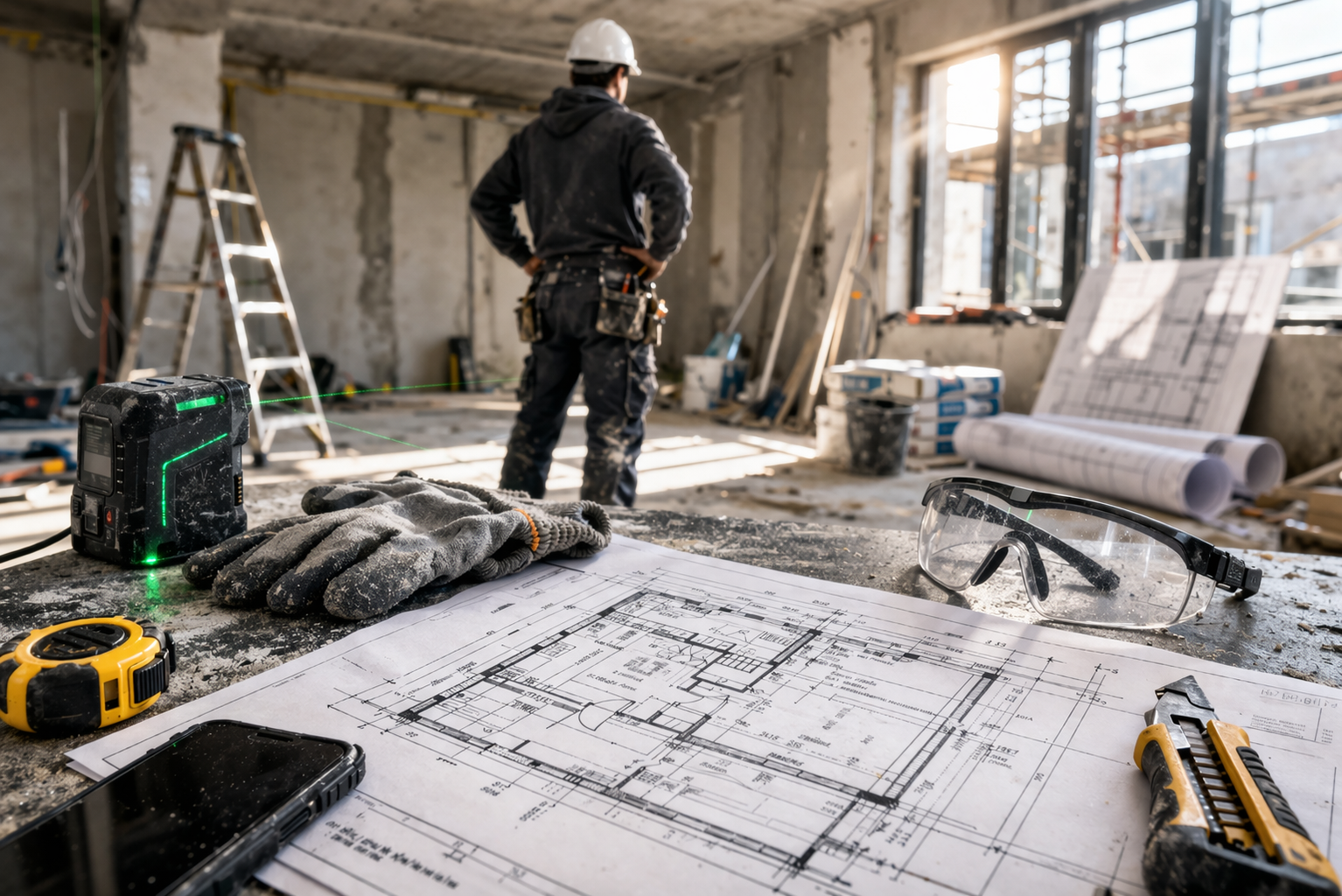
Profit Disappears in the Estimate, Not on the Job
When a job loses money, tradesmen usually blame the job. The client changed scope. Materials went up. The subcontractor was slow. But in most cases, the problem started before the first day on site — it started in the estimate.
A weak estimate does not just cost you money. It creates friction with the client, because every cost that was not in the original quote feels like a surprise. And clients who feel surprised do not recommend you to their friends.
Here are seven estimation mistakes that cost tradesmen real money, and how to avoid each one.
Mistake 1: Estimating from the Last Job
You tiled a bathroom last month for 8,000 PLN. A new client wants a similar bathroom tiled. You quote 8,000 PLN.
The problem: the new bathroom has a different layout, different tile size, a window alcove that requires 40 additional cuts, and the substrate needs levelling compound that the last job did not. Your "similar" job has 25% more labour and 15% more materials than the reference.
Fix: Estimate every job from scratch. Use your previous jobs as a sanity check, not as a starting point. Document each completed job with actual costs so you have real reference data, not memory.
Mistake 2: Forgetting Waste Allowance
You measure 24 m2 of floor area. You order 24 m2 of tile. On site, you discover that the room is not square — it never is — and the tile pattern creates half-tile cuts along one wall. You need 28 m2. The extra 4 m2 comes out of your pocket.
Fix: Standard waste allowances: 10% for rectangular rooms with large-format tile, 15% for diagonal layouts or small-format tile, 20% for irregular spaces or patterned layouts. Add it to the estimate as a visible line so the client understands.
Mistake 3: Underpricing Preparation
Preparation is invisible to clients and often invisible in estimates. But stripping wallpaper, removing old tile adhesive, levelling floors, treating damp patches, and protecting adjacent surfaces can easily consume 30-40% of total project hours.
Fix: List preparation as its own section in the estimate. Break it into specific tasks with hours allocated. If the client asks why prep is so expensive, you have a clear answer — and they will appreciate the transparency when the finished work is flawless because the preparation was thorough.
Mistake 4: Not Pricing Disposal
An old kitchen demolition generates between 0.5 and 1.5 tonnes of waste. A bathroom strip-out produces rubble, old sanitaryware, and potentially hazardous materials like old adhesives. Skip hire, bagging, and tip runs cost money.
Fix: Price disposal as a separate line item. Get a skip quote for the estimated volume. If you are bagging and running to the tip yourself, price your time and fuel honestly. Disposal that is not in the estimate is disposal that comes out of your margin.
Mistake 5: Ignoring Travel and Setup Time
You quoted labour for the work itself. But you drive 40 minutes each way. You spend 30 minutes setting up each morning and 20 minutes packing down each evening. Over a two-week job, that is 20+ hours of unbilled time.
Fix: Include a daily travel and setup allowance in your estimate. Either add it to your day rate or include it as a separate line. Either way, it needs to be in the number.
Mistake 6: No Contingency Line
The client asks you to remove the bathroom floor tiles. You do, and discover the screed underneath is cracked and needs replacing. That was not in the estimate. Now you are either doing unpaid work or having an uncomfortable conversation.
Fix: Every estimate needs a contingency. For visible, straightforward work: 5-10%. For renovation where you cannot inspect behind surfaces: 15-20%. Explain to the client what the contingency covers and agree in advance how unused contingency is handled.
Mistake 7: Verbal Estimates
A verbal estimate is not an estimate — it is a guess that two people will remember differently. You said "around eight thousand." The client heard "eight thousand." When the invoice is 9,200, you have a dispute.
Fix: Every estimate in writing. Every time. It does not need to be elaborate — a clear list of what is included, what is excluded, material costs, labour costs, contingency, and total. Share it digitally so there is a timestamp and a record.
With JobDone, you can build a simple cost estimate in the app and share it as a clean document alongside your photo survey of the site. The client gets a professional package, and you have a documented starting point if the scope changes later.
The Pattern
All seven mistakes share a root cause: estimating from assumption instead of measurement. Measure the space. Price the materials today, not from memory. List every task, including the unglamorous ones. Put it in writing.
The tradesmen who estimate well are not the cheapest — they are the ones whose final invoice matches the original quote. That is what builds a reputation.